Propping things up properly
For a year, my tablet leaned against whatever was nearest. A stack of invoices. The fruit bowl. Once, memorably, a sleeping cat, who did not consent and eventually said so.
This is the sort of problem you do not fix because it does not feel like a problem, until one evening your neck files a complaint on the way to bed and you finally spend two minutes ordering the obvious thing.
The Obvious Thing
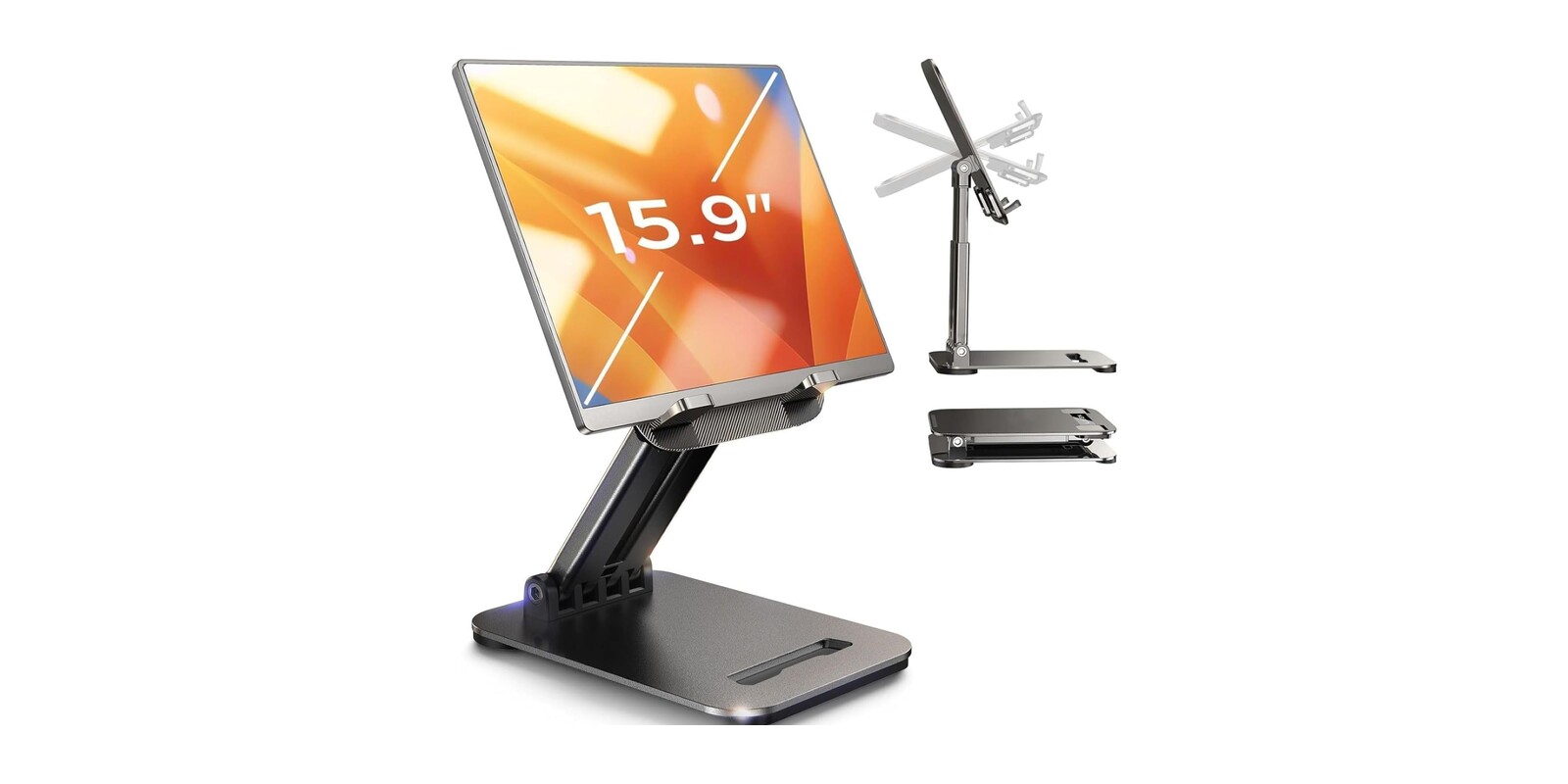
The obvious thing was a LISEN adjustable tablet stand. A weighted base, an arm that adjusts for height and angle, rubber where it touches your device and your table. It holds anything from a phone to a large iPad, folds flat, and slips into a bag when I travel, which was the detail that sold me.
It is heavier than it looks, and that is a compliment. The weight is why a big iPad Pro can sit on it at full height without the whole arrangement nodding forward. Reviewers with arthritic necks, tired mothers, and one self-described busy lad doing video calls all report the same essentials: it holds, it adjusts, it lasts. One buyer propped up a tablet so their elderly mother would stop hunching at the kitchen table, which is exactly the kind of purchase I understand.
One honest wobble: with a heavy tablet in a thick case, at the tallest and most upright setting, it can tremble slightly when you tap the screen. Lower the angle a notch and it settles. If your tablet lives in armour, know this going in.
Where It Ended Up
I bought it for my desk, for the second screen of small dashboards that follows me around my working day. It spends its evenings in the kitchen instead, holding up a recipe at eye level while I cook and Macca reads the steps aloud like a small stern announcer.
The cat has been formally released from furniture duty. Everyone is better for it.
As an Amazon Associate I earn from qualifying purchases. This comes at no extra cost to you.